Sudoku
Prefer numbers to words? Sudoku is a logic puzzle anyone can learn in a minute and enjoy for years.
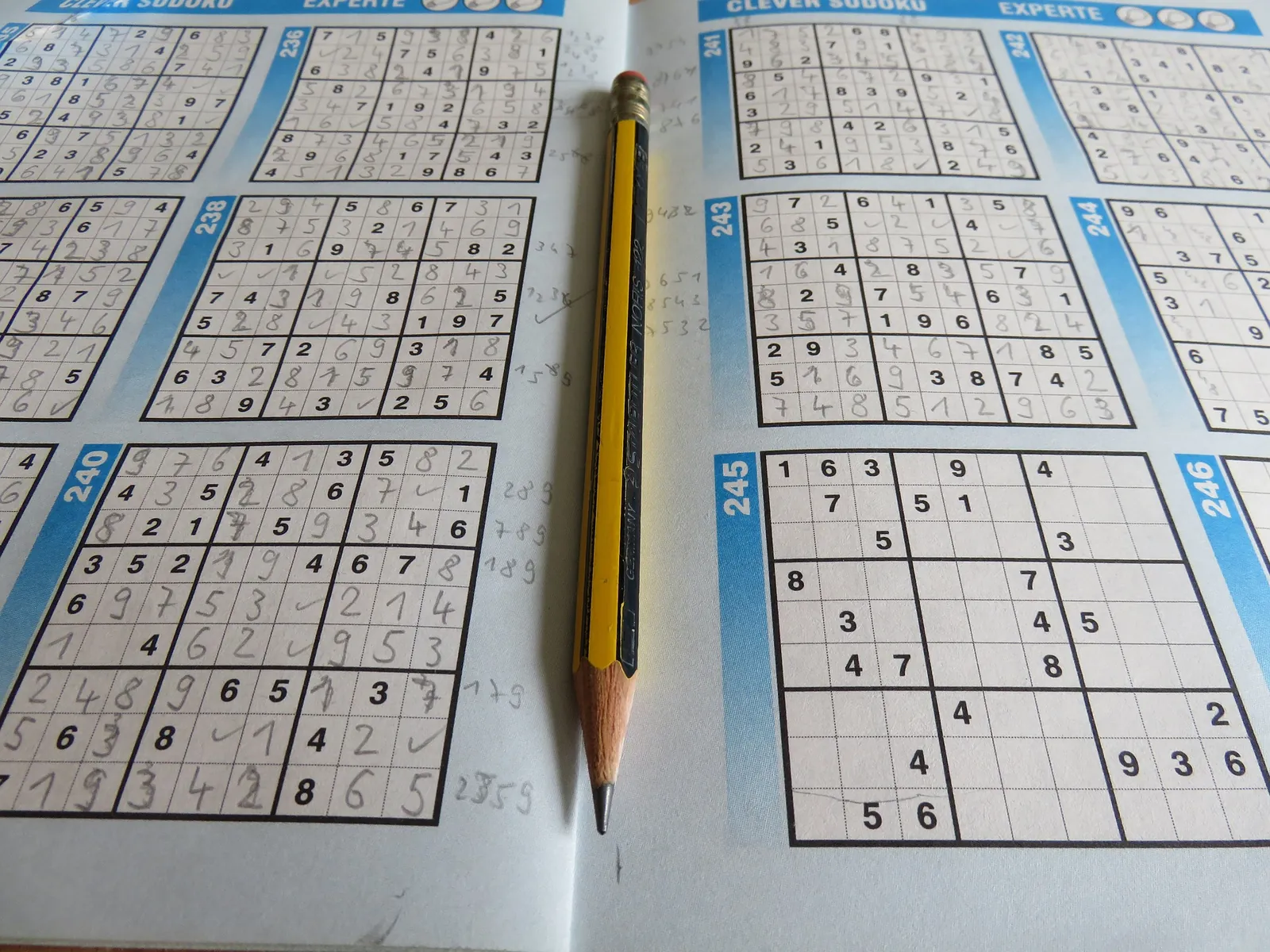
All about sudoku
Crossword puzzles not for you? If you prefer puzzles with numbers to puzzles with words, sudoku is well worth trying. There are many crossword puzzle benefits, but there are plenty of reasons to try sudoku too.
The aim is to complete a 9 x 9 grid so that every row, every column and each of the nine 3 x 3 boxes contains the numbers 1 to 9 exactly once. A few numbers are given at the start. You do not need to do any arithmetic: the numbers could just as well be letters or symbols. It is pure logic.
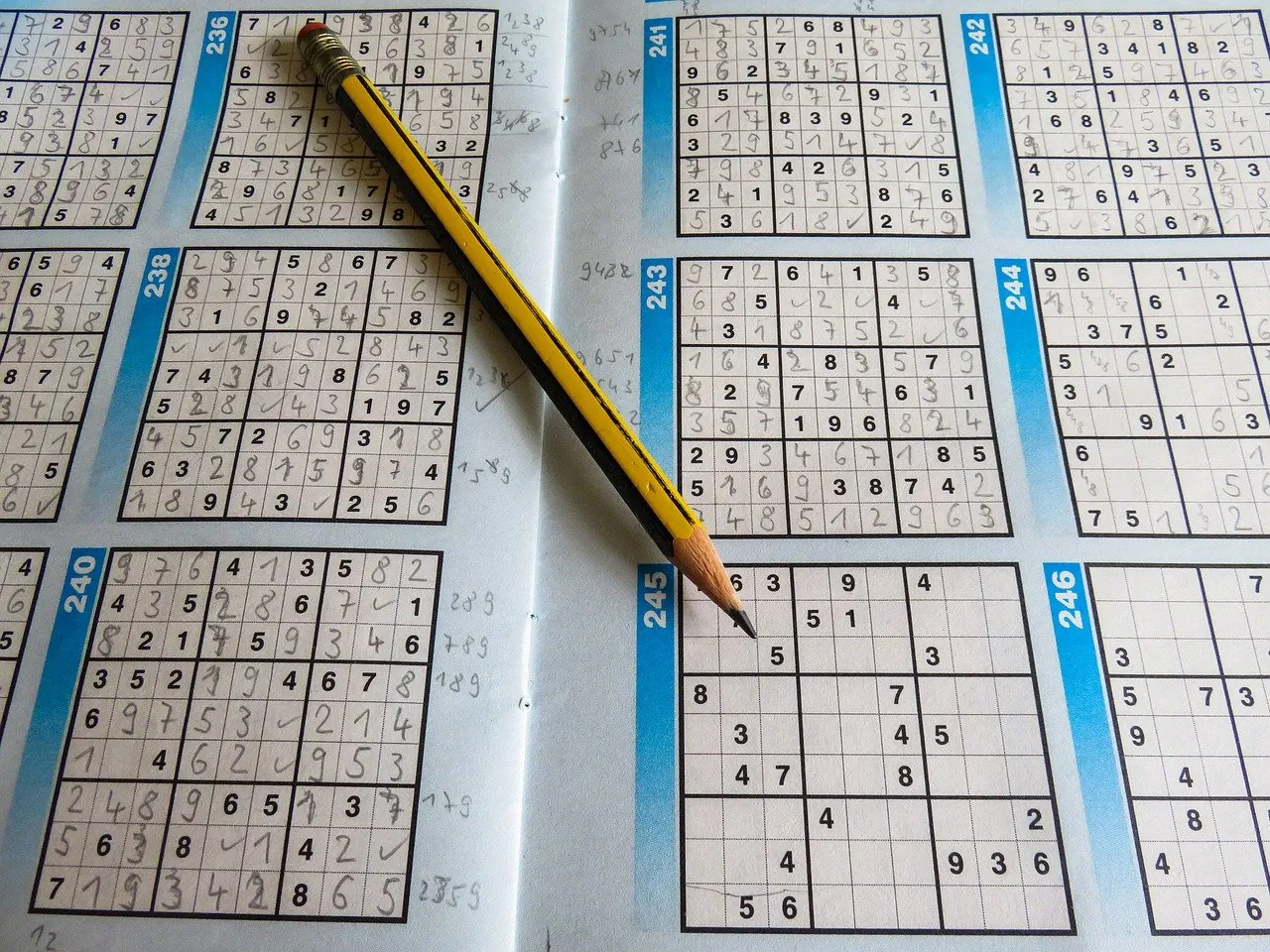
The history of sudoku
The modern puzzle looks simple, but its roots go back a long way.
Mathematicians studied Latin squares, grids in which each symbol appears once in every row and column, centuries ago; the Swiss mathematician Leonhard Euler wrote about them in the 18th century. In the 1890s, French newspapers printed number puzzles that worked in a similar way.
The puzzle we know today was created in 1979 by Howard Garns, an American puzzle designer, and published by Dell Magazines under the name Number Place, on a 9 x 9 grid with 3 x 3 boxes.
The name came from Japan. In 1984 the puzzle company Nikoli published it as Sūji wa dokushin ni kagiru, roughly "the digits must be single", and the name was soon shortened to sudoku. The puzzle became a worldwide craze in the mid-2000s after British newspapers began printing it daily.
Why is sudoku so popular?
Sudoku is a fun logic game you can play anywhere. It is a good way to pass time on a commute or while waiting for an appointment, and a puzzle takes anything from a few minutes to an hour depending on the difficulty.
It also has no language barrier and no age limit. Anyone who recognises the numbers 1 to 9 can play, and beginners can start with small 4 x 4 grids that only use 1 to 4.
Sudoku and your brain
Logic puzzles like sudoku give your brain a workout. A few minutes a day can be a relaxing way to wind down after a long day while keeping your mind active. Research suggests that people who regularly do puzzles tend to score better on some thinking tests, although puzzles are not a proven way to prevent conditions such as dementia. If you have concerns about memory, speak to a doctor.
Sudoku variants
Sudoku comes in many variants, depending on what you are in the mood for:
- Mini sudoku: smaller grids such as 4 x 4 or 6 x 6, ideal for beginners and children.
- Larger grids: 12 x 12 or 16 x 16 for a longer challenge.
- Killer sudoku: no numbers given, but cages of cells show the sum they must add up to.
- Overlapping grids: several sudokus that share boxes, such as the five-grid "samurai" layout.
- Diagonal sudoku: the two main diagonals must also contain 1 to 9.
If you enjoy the arithmetic side, try KenKen, which adds sums and products to the logic. For solving tips, see crossword mysteries and sudoku puzzles.